Helping our youth to understand the importance of energy and electricity to energize our good lives

Why Should We Invest Time with the Public School Students?
From a personal viewpoint, I have always considered it a high priority to do my best to support energy education of the public and especially our public school students. A great group to start with if we wish to improve the general public’s understanding of the importance of energy. Perhaps if we start with the youth, they will educate their parents on the facts; That conventional sources comprise about 90% of the total energy that makes our high quality of life possible. By conventional, I mean, Natural Gas, Nuclear, Coal and Hydroelectric.
All of us who have been employed in the supply chain of producing energy understand the rarity of energy savvy people we meet who are not or have not been closely involved with our industry. So, when an opportunity to present a short class on energy and electricity generation came up at our local Middle School, I accepted the invitation. Here are some of the slides I will use for this group of 8th Graders.
The general public’s knowledge of energy and it’s importance seems to be limited to gasoline prices. When in a social setting and I discuss the U.S. need for 100 Quadrillion Btu’s of energy and where it comes from, most people’s eyes glaze over and are not very interested. However, with the Russia-Ukraine war, it seems folks are more interested now than they were a few months ago. Perhaps timely to give a course on energy fundamentals.
Each American uses about 800,000 to 1 million Btu’s every day

How did I come up with 800,000 – 1,000,000 Btu’s per person, per day? Here is how: America uses right at 100 Quadrillion Btu’s annually. If 100 Quadrillion (15 zeros) is divided by the population of the U.S.A. of about 330 million people, the result is about 303 million Btu’s per person. This is the average energy use for each of us. Then, divide 303 million by 365 days per year and it is 830,000 Btu’s per day. The above illustration shows how we may use our portion of fuels to consume our share of the Nation’s energy. If we are traveling by car for an interstate trip, we can easily use more than a million Btu’s in a day. Likewise, ordering a large shipment of furniture or heavy goods from Amazon or other on-line Retailer will require energy to be used on our behalf to deliver our products to the door. You get the picture.
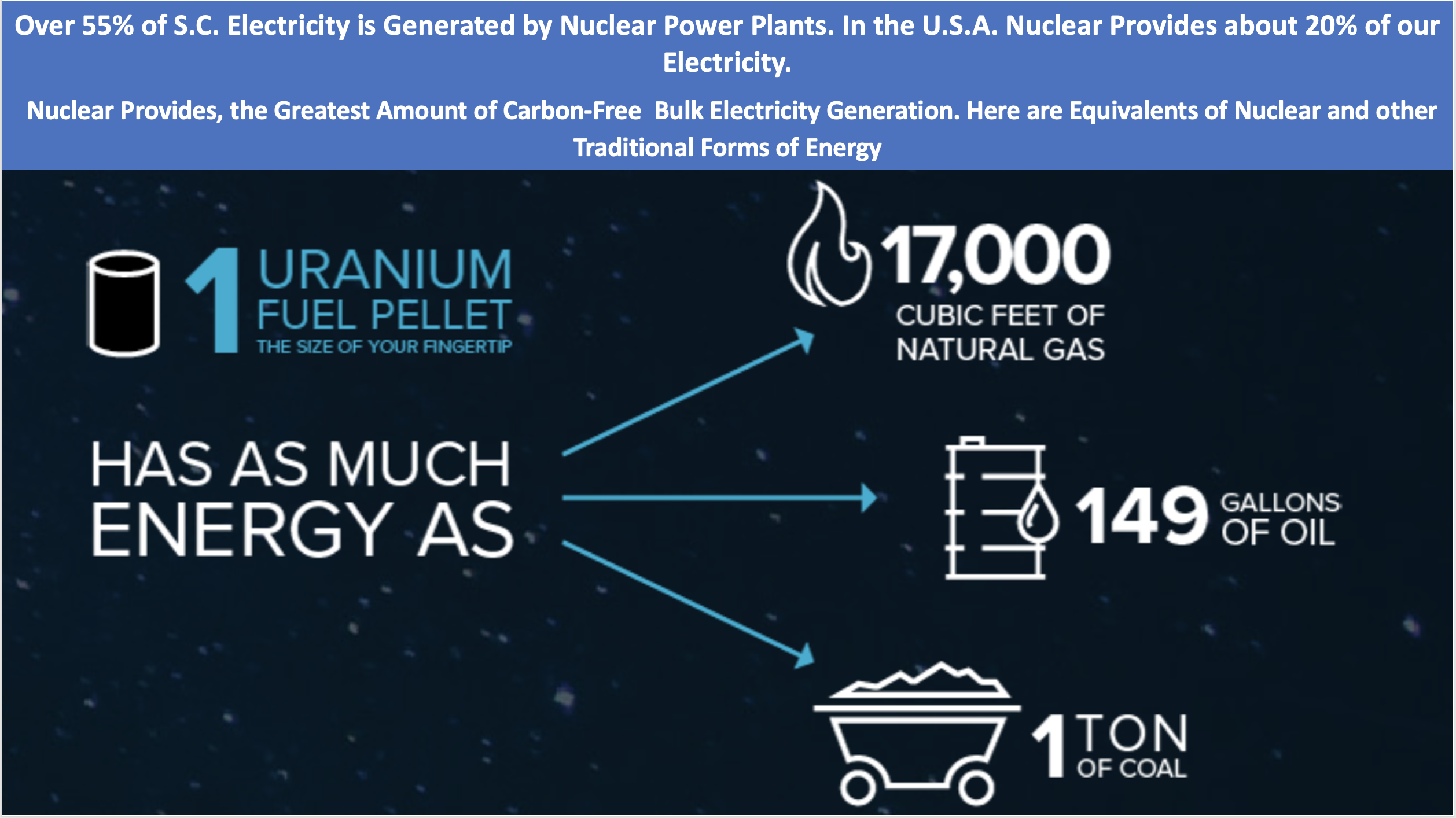
Another way to illustrate 300-330 million Btu’s is to show the equivalence in barrels of gasoline, Diesel Fuel, propane or coal. Also, nuclear. This is shown below.

So Where Did You Come up with 100 Quadrillion Btu’s?
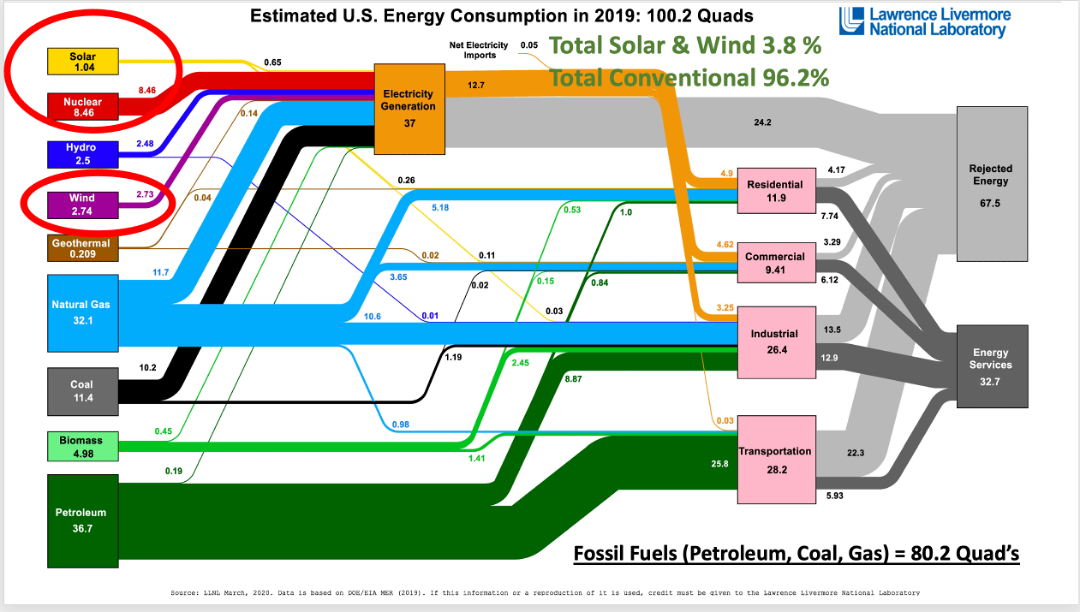
The U.S. Department of Energy has been measuring, calculating and reporting total primary energy use for decades. I have been watching this and America’s energy use has held right at 100 Quadrillion Btu’s +/- 10%, for the last twenty years or so. Below is the Sankey diagram which shows 2019 total primary energy flows. The sources are on the left and uses are on the right. This is how the breakdown of uses was established: 37% electricity generation, 28.1% transportation, 26.4% Industrial, 11.4% Residential and 9.41% Commercial.
I stated above that the U.S. has used right at 100 Quadrillion Btu’s for decades. The chart below published by the EIA (Energy Information Administration) shows the total energy used 1950 to 2019. The differences in “Production and Consumption” are imports. As of December 2020, America produced as much energy as we consumed. Again, right at 100 quadrillion Btu’s.

Let’s Drill Down to See Where the Energy Is Used in SC to Generate Electricity

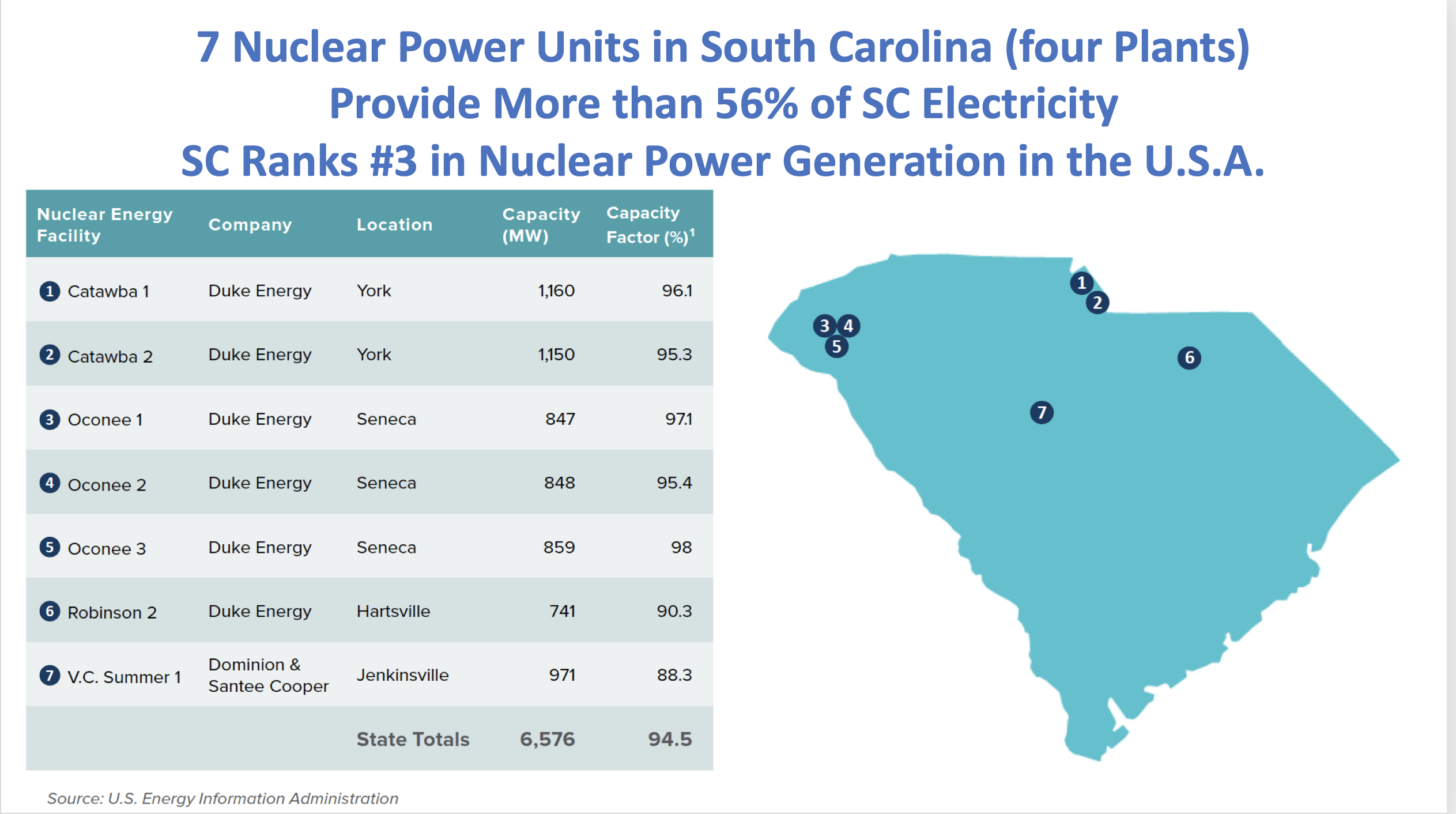
Currently and at least through 2030, over 50% of South Carolina’s electricity will come from nuclear power generation.
S.C. has four large nuclear power plants with a total of seven generating units. Here is a map of where they are located.
The second largest source of our electricity is natural gas fuel. This is burned very efficiently in power plants such as this. The newest natural gas generating plants can obtain thermal efficiencies over 60%.

Coal fuel was over 50% of Santee-Cooper’s electric generation about ten years ago. Since then, natural gas fuel became lower in cost and abundant and has replaced much of the coal power generation. However, today natural gas prices are increasing and it is likely that coal fuel will be more economical to generate our electricity not generated by nuclear and renewables.
The Santee-Cooper coal plants that provide electricity to our local electricity distributor, Palmetto Electric Co-Op are shown below.

Isn’t Most of Our Power Provided by Solar, Wind and Hydro-Electric?
No! That is a popular misconception. Even the Wall Street Journal has misled people into thinking that most of our electricity is generated by renewables (wind, solar and hydro). The data above show the true facts of the sources of our electricity and total energy.

Note that of our total energy in 2019, wind and solar together only provided about 3.8% of America’s total energy. The 96.2% was provided by conventional forms of energy such as nuclear, natural gas, coal and hydro-electric. The WSJ Headline is accurate in stating that 90% of the New Electricity Generation in 2020 came from Renewables. That is because they used “Nameplate Capacity” for the Renewables and the simple fact that the “Old coal, Nuclear, Coal and Hydroelectric” plants are very robust, reliable and have long lives when properly maintained.

The Santee-Cooper Pinnopolis Dam, Hydro-Electric plant is shown above. When I use the term “Old Hydroelectric plants”, this is where I was coming from. If you look at “Total Renewables Energy” on the Sankey diagram above, you will see that most of the renewable generation is from old hydroelectric plants. In 2019 that was about 2.5% of our total primary energy as compared to 1.04% solar.

These are the hydro plants operated by Santee-Cooper. Located about 100 miles north of Hilton Head near Moncks Corner, SC.
Solar
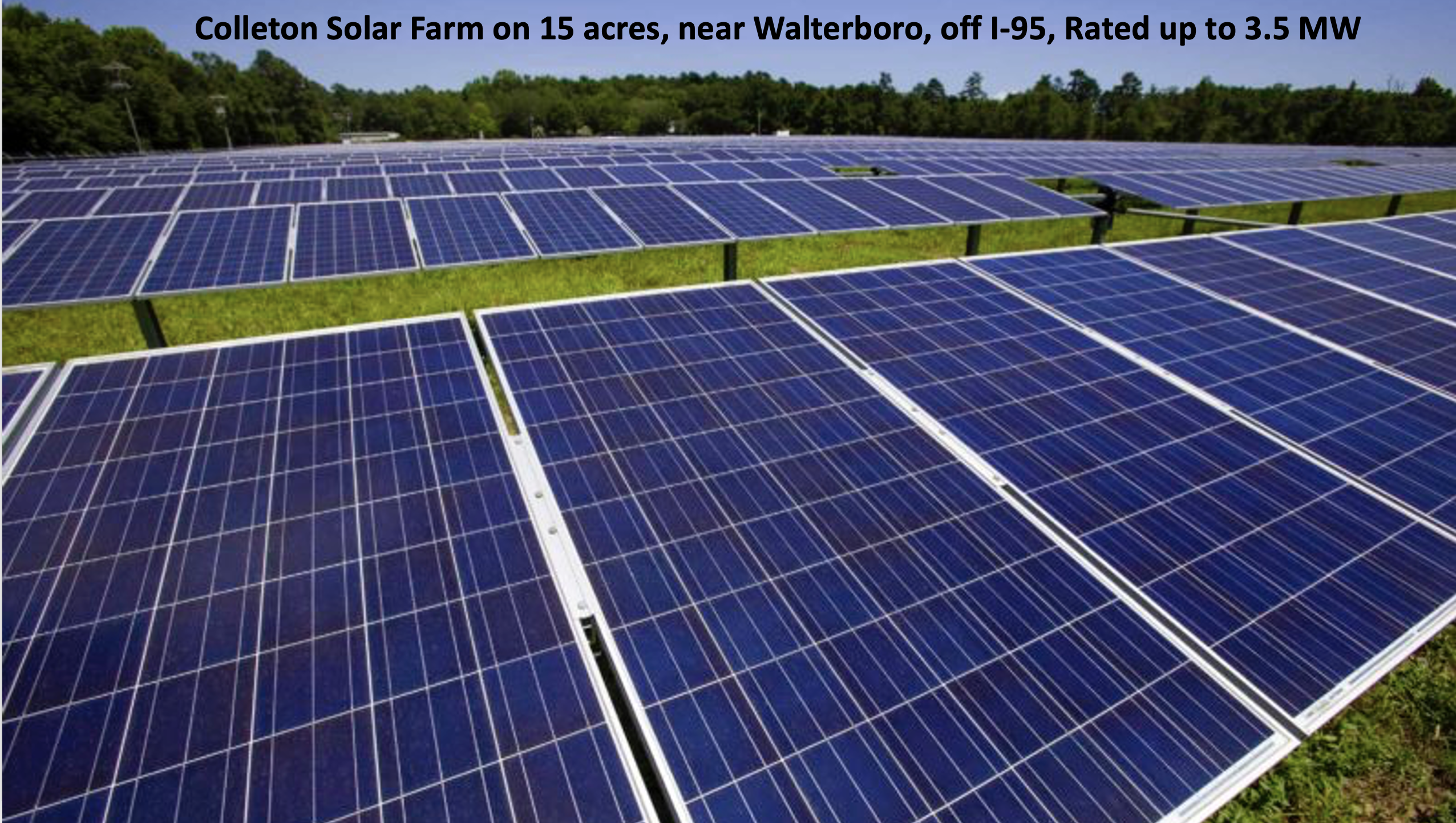
Much is written in the news about solar and many people are of the impression that solar is a major source of Bulk Electric generation. The fact is that yes, much money is being invested in solar but the total generation is very small when compared to nuclear, gas and coal. Here below is a much hyped solar farm on the east side of I-95 about 50 miles north of Hilton Head. It is about 15 acres and during a bright sunny day will produce about 3.5 MW.
By the way, if 3.5 MW seems like a lot of electric power consider that on a hot summer day Hilton Head Island uses about 180 MW during peak Demand.
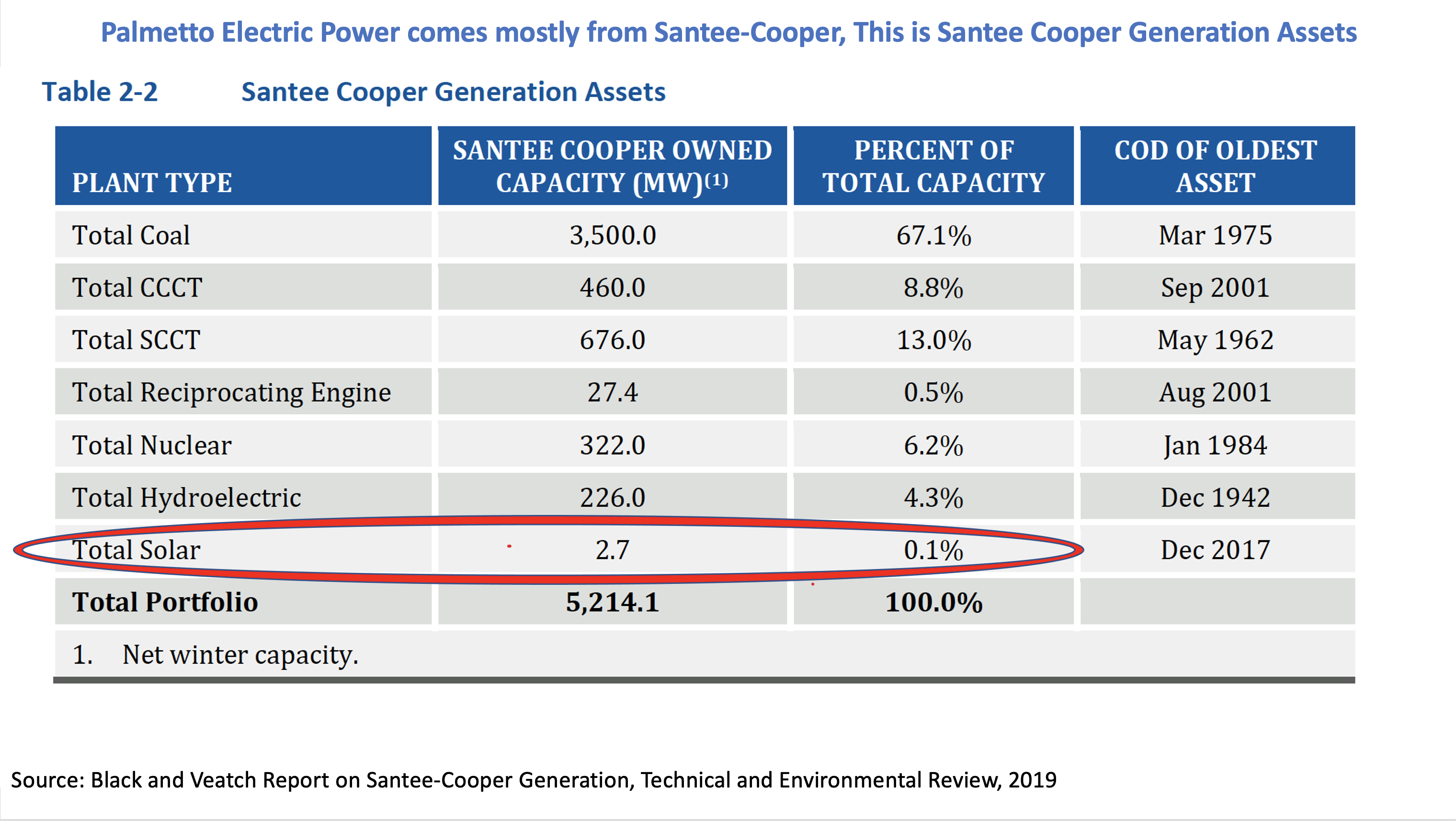
Palmetto Electric Co-Op distributes electricity on Hilton Head Island. They obtain most of their Bulk Power wholesale from Santee-Cooper which is owned by the state of SC. Generation capacity of Santee-Cooper power plants is listed below. Note, most generation capacity is coal, nuclear and natural gas.
Electricity is Secondary Energy and uses about 37% of America’s total Primary Energy. The other 63% of Energy is Important to Fuel Our High Quality Lives!
The Federal government, at this point in time, is stating and making policies that would “Electrify Everything”. Especially transportation. Most large automobile manufacturers have stated that they plan to phase out the Internal Combustion Engine by 2035. That is only 13 years into the future.
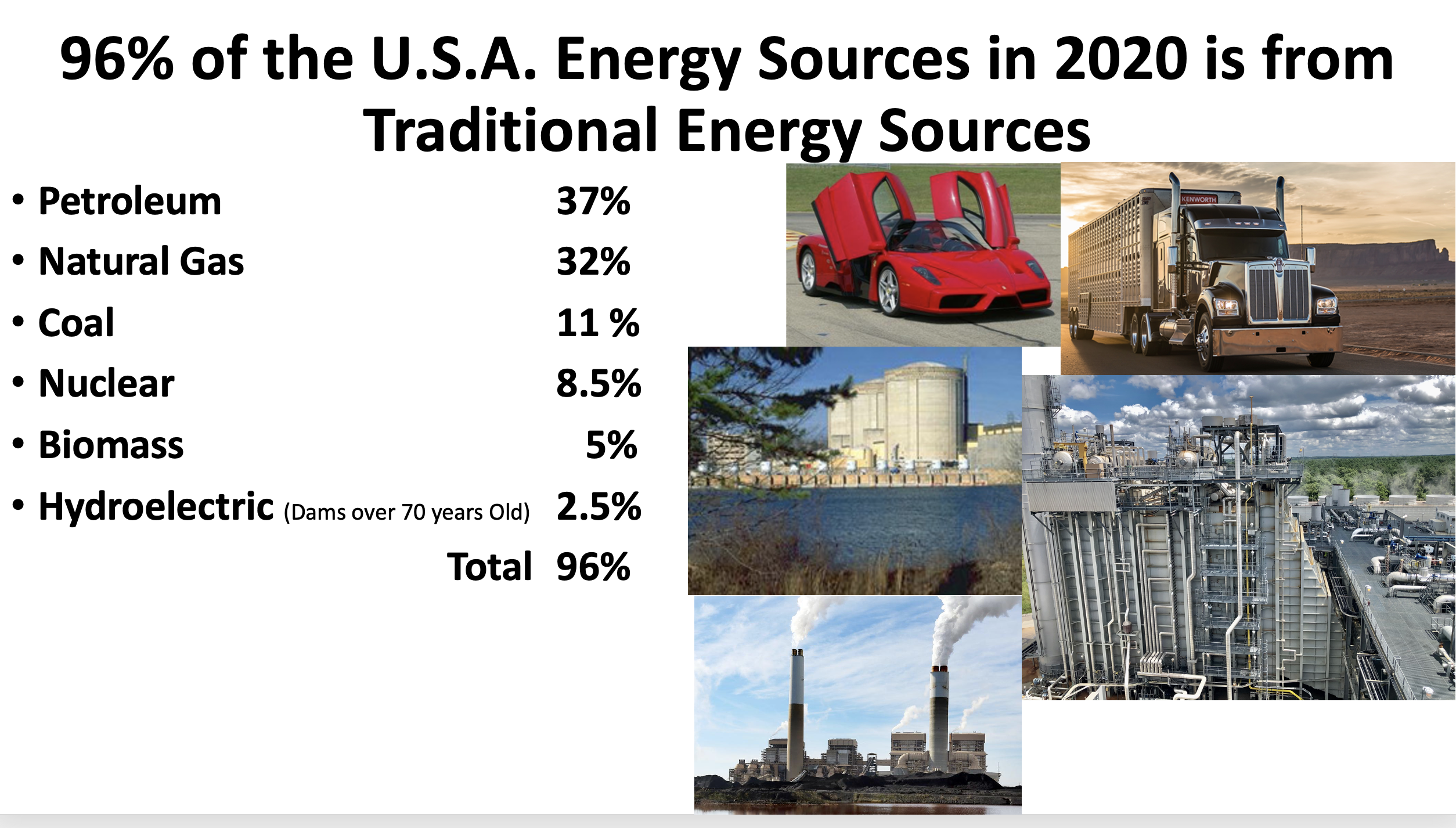
Think about the chart above. Yes, 96% of our Primary Energy comes from conventional sources. (I consider nuclear, coal, gas, biomass and hydroelectric all conventional sources) The highest percentage of primary energy is from petroleum. America uses about 20 million barrels per day of oil. To illustrate what 20 million barrels per day looks like, take a look at the photo below. This is a picture of me standing in front of a portion of the above ground Aleyeska pipeline in Alaska. It is above ground because of passing through frozen tundra and the heated oil must be above ground for environmental and pipeline integrity concerns. This pipeline is capable of moving about 2 million barrels of oil per day. So, to imagine the quantity of oil that America uses, picture 10 of these pipelines side by side. Yes, 10 pipelines like this. At 42 gallons per barrel, that is a lot of oil.(2)

Most rimary energy is used in “Heat Engines” that convert heat energy to motive force. Another point to imagine, is if the about 275 million light trucks and cars registered in the U.S. were converted to EV’s…..This could create Demand for an enormous amount of electricity. However, in some cases the electricity needs to be “Dispatchable” when it is needed, such as in charging EV’s on a road trip. In other cases such as long range aircraft and ship propulsion, electricity is not an option with current technology. Fossil Fuels are important to fuel our lives.

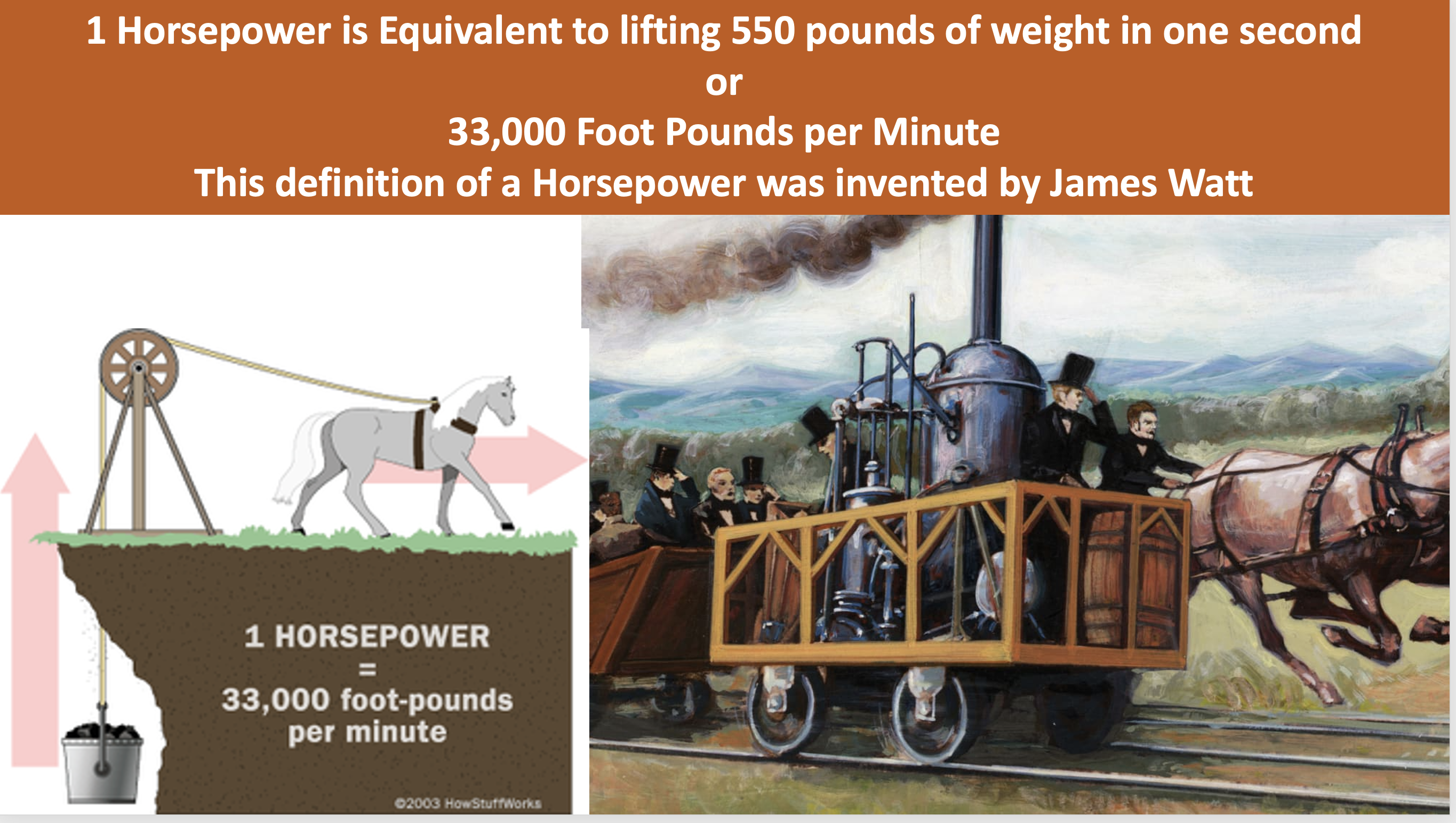
Heat Energy from fuels is enormous. Just a reminder of the definition of a “Horsepower” and a BTU (British Thermal Unit).
A horsepower is equivalent to the work accomplished by lifting a weight of 550 pounds in one second or 33,000 Foot pounds per minute. One BTU converted at 100% thermal efficiency to work is equivalent to 778 Foot pounds. A gallon of gasoline contains between 115,000 and 125,000 Btu’s. So one gallon of gasoline is worth over 90 million foot pounds of work.
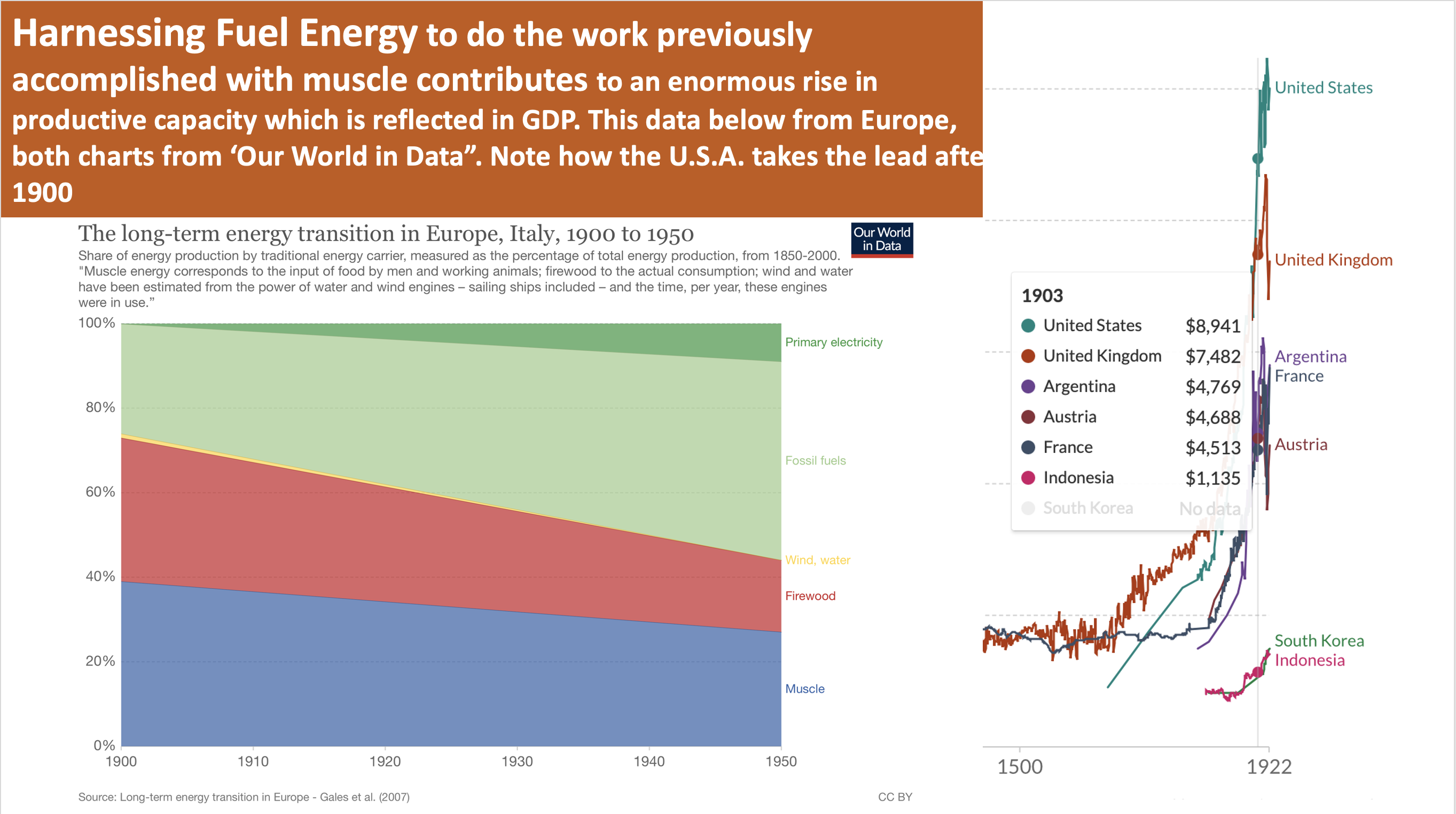
Perhaps a reminder of agricultural productivity is timely. At the turn of the 20th Century, about 40% of our population was required to work on the farms to feed our nation. Then, we changed from muscle power of animals to mechanized farming, using tractors. The work of a team of horses could be accomplished with a single gasoline powered tractor.
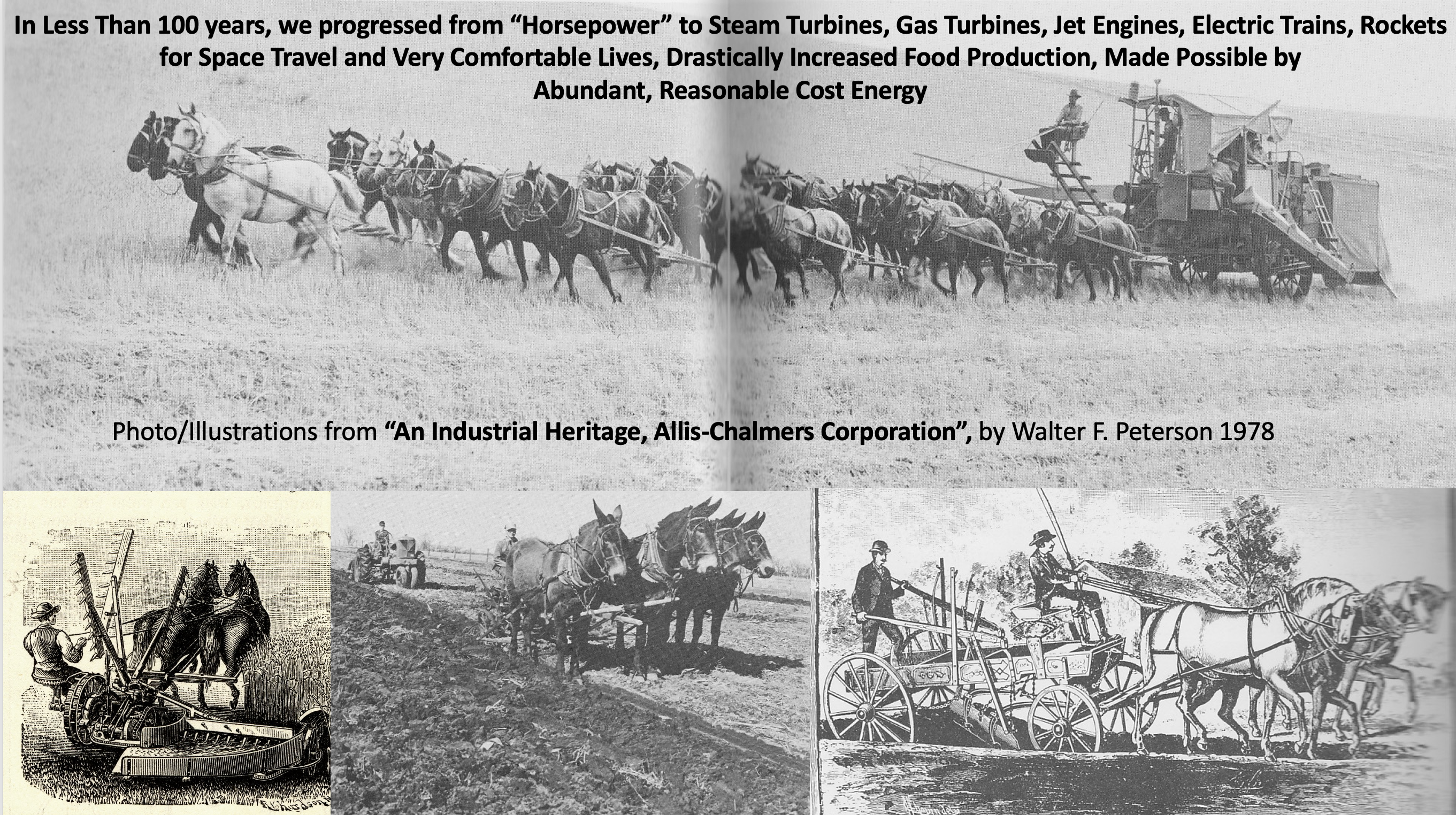

A reminder from U.S. history…..Our Economy became the largest in the world as America switched from muscle power of draft animals and humans to mechanization powered by fossil fuels.
Summary and Conclusions
- Energy and Economic Prosperity are inter-related
- America has used about 100 Quadrillion Btu’s annually for decades and to preserve our high quality of life, will continue to require 100 Quadrillion+ Btu’s each year into the future
- Fossil fuels provide about 80% of our total primary energy
- Conventional forms of energy, including Gas, Nuclear, Coal and old Hydroelectric plants, provide over 90% of our primary energy
- The Mainstream News, Entertainment and Misguided Politicians are wrong to attack fossil fuels. Donn Dears book(4) “Net Zero Carbon, Climate Policies Destroying America” lays out facts and policies to support the title
When I am in the classroom, I will not discuss the politics of “Climate Change”, only the facts on energy and electricity. I hope all of my friends employed in energy industries do likewise to attempt to set the record straight on the importance of energy and electricity.
Yours very truly,
Dick Storm, March 9, 2022
References for further reading and research:
- Dick Storm USCB-OLLI Courses, Energy and Electricity, History of Energy and Electricity and the Future of Energy and Electricity. The four parts of the “History of Energy and Electricity” are on my website: https://dickstormprobizblog.org
- Global Energy Monitor, Alaska Pipeline facts: https://www.gem.wiki/Trans-Alaska_Oil_Pipeline_System
- Dick Storm’s views on Electrify Everything, Capital Research Center, Nov. 2021:https://capitalresearch.org/article/forced-electrification-part-4/
- Net Zero Carbon, The Climate Policy Destroying America” by Donn Dears. Available on Amazon
- Alabama Power, Miller Steam Plant, An intersting video of how a large coal plant works: https://www.youtube.com/watch?v=0ftl-WM6wms
- A more factual asessment of Sea Level Rise to counter the exaggerations by movies on Climate Catastrophe’s, about 1.36 ft/100 years: https://www.tidesandcurrents.noaa.gov/sltrends/sltrends_station.shtml?id=8534720 and WUWT Sea Level Rise: https://wattsupwiththat.com/2021/06/14/sea-level-rise-fastest-in-2000-years-or-not/
- National News on Nuclear Power needed for the future carbon free generation January 23, 2022: https://www.nationalnewswatch.com/2022/01/18/race-to-cut-carbon-emissions-splits-u-s-states-on-nuclear-b/#.Ye2BWS-B2J9


One thought on “Mentoring the Middle School Students”